A Decade Later, in Norway
There are moments in a professional life that feel strangely ordinary while they are happening, and then surreal afterward.
Norway was one of those moments for me.
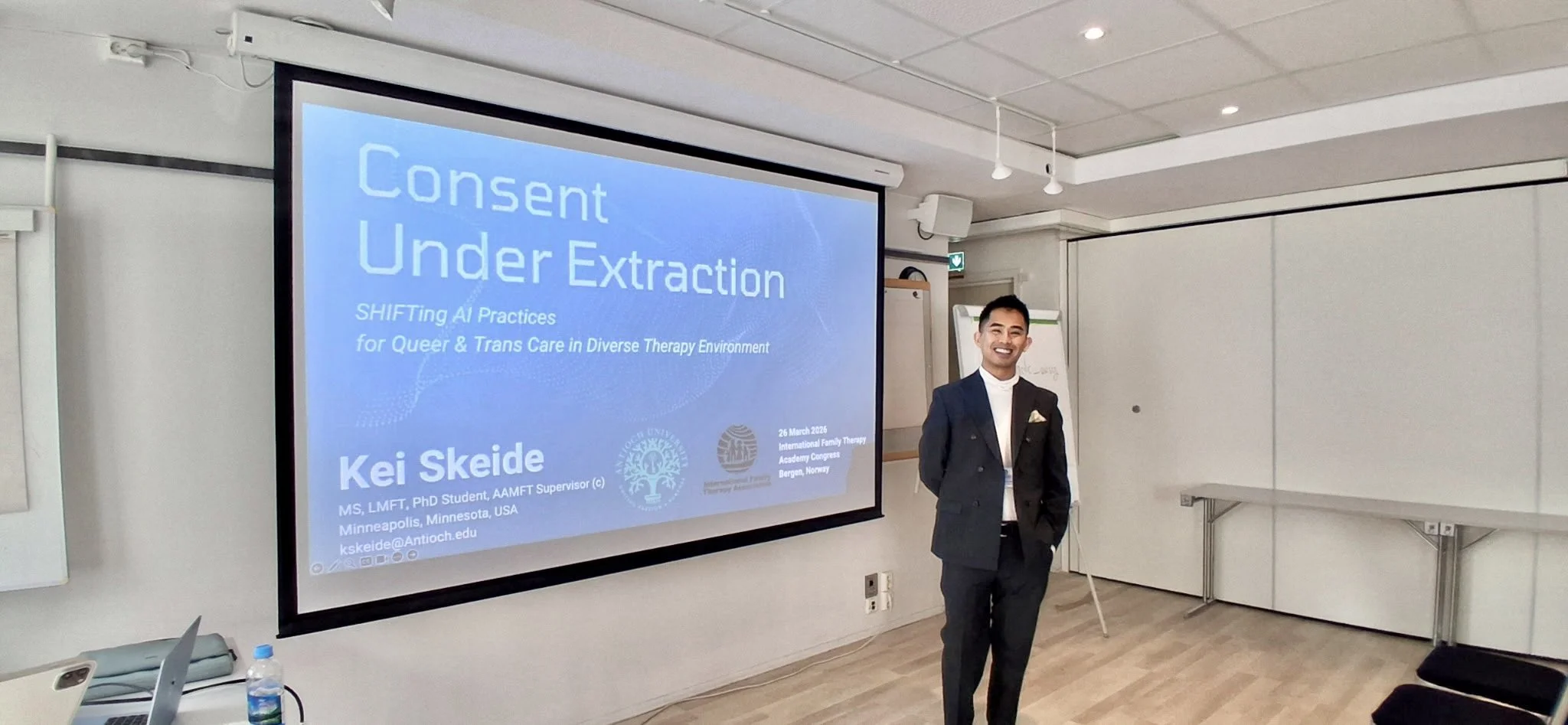
I went to Bergen to present at IFTA, to be in conversation with people thinking deeply about families, systems, therapy, culture, policy, and the future of our field. On paper, it was a professional trip. A conference. A presentation. A chance to meet people, listen, learn, and participate.
But emotionally, it felt like something else.
At one point, I was interviewed by the communications team. The interview itself went fine. I answered questions. I talked about the work. I tried to be present. But afterward, watching the video, something in me paused.
It felt strange to see myself positioned as someone with something to say.
Not because I do not believe in my work. I do. But because ten years ago, I was just trying to enter the field. I was trying to understand what it meant to become a therapist, what kind of clinician I wanted to be, and whether there was room for someone like me in spaces that often felt structured around people with very different histories, resources, and assumptions.
Ten years ago, I was learning the language of the profession. Now in Norway, speaking into it.
That shift is hard to metabolize.
So much of professional development is framed as forward motion: degrees, licenses, conferences, publications, presentations, credentials. But the internal experience is rarely that clean. Sometimes growth feels less like achievement and more like disorientation. You look around and realize you are standing inside a life you once hoped for, and part of you is still catching up.
What I kept thinking about in Norway was not just accomplishment. It was continuity.
The younger version of me who entered this field is still here. The questions are still here. How do we make therapy more humane? How do we take systems seriously without losing the person in front of us? How do we practice with integrity in a world shaped by inequality, loneliness, and disconnection? How do we build a field that does not simply train therapists, but actually sustains them?
Being interviewed, presenting, and participating internationally did not make those questions disappear. It made them louder.
That may be the real gift of moments like this. They do not prove that we have arrived. They invite us to notice how far we have traveled, what we are still carrying, and what responsibilities come with being seen.
Norway reminded me that becoming a therapist is not only about competence. It is also about memory, humility, and staying in relationship with the reasons we began.