Social Justice
&
Public Scholarship
Learning is a collaborative process shaped by dialogue, feedback, and shared reflection.
My writing, conference presentations, and public service during my doctoral education reflect my historical and evolving commitment to public scholarship: translating complex clinical, cultural, and technological questions into conversations that clinicians, educators, researchers, and community partners can use in practice.
The following is a me reciting my reflection, On Social Justice.

In March 2026, I presented “Consent Under Extraction: SHIFTing AI Practices for Queer and Trans Care in Diverse Therapy Environments” at the International Family Therapy Academy Congress in Bergen, Norway.
The presentation examined how artificial intelligence is entering therapy, education, and relational life in ways that can reproduce extraction, surveillance, bias, and harm, particularly for queer, trans, and other structurally marginalized communities. The presentation introduced a framework to help clinicians, educators, and researchers think more carefully about AI, consent, surveillance, bias, and relational accountability in queer and trans care.
See reference list & slides →

A Call to Relational Courage
Published in early 2026, “A Call to Relational Courage” is a public-facing essay I wrote for Antioch Voices, part of the Common Thread forum. Written from my location as an educator, student, relational therapist, and queer and trans brown immigrant, the piece reflects on grief, immigration enforcement, state violence, and the civic practices through which care becomes real.
Read full essay →
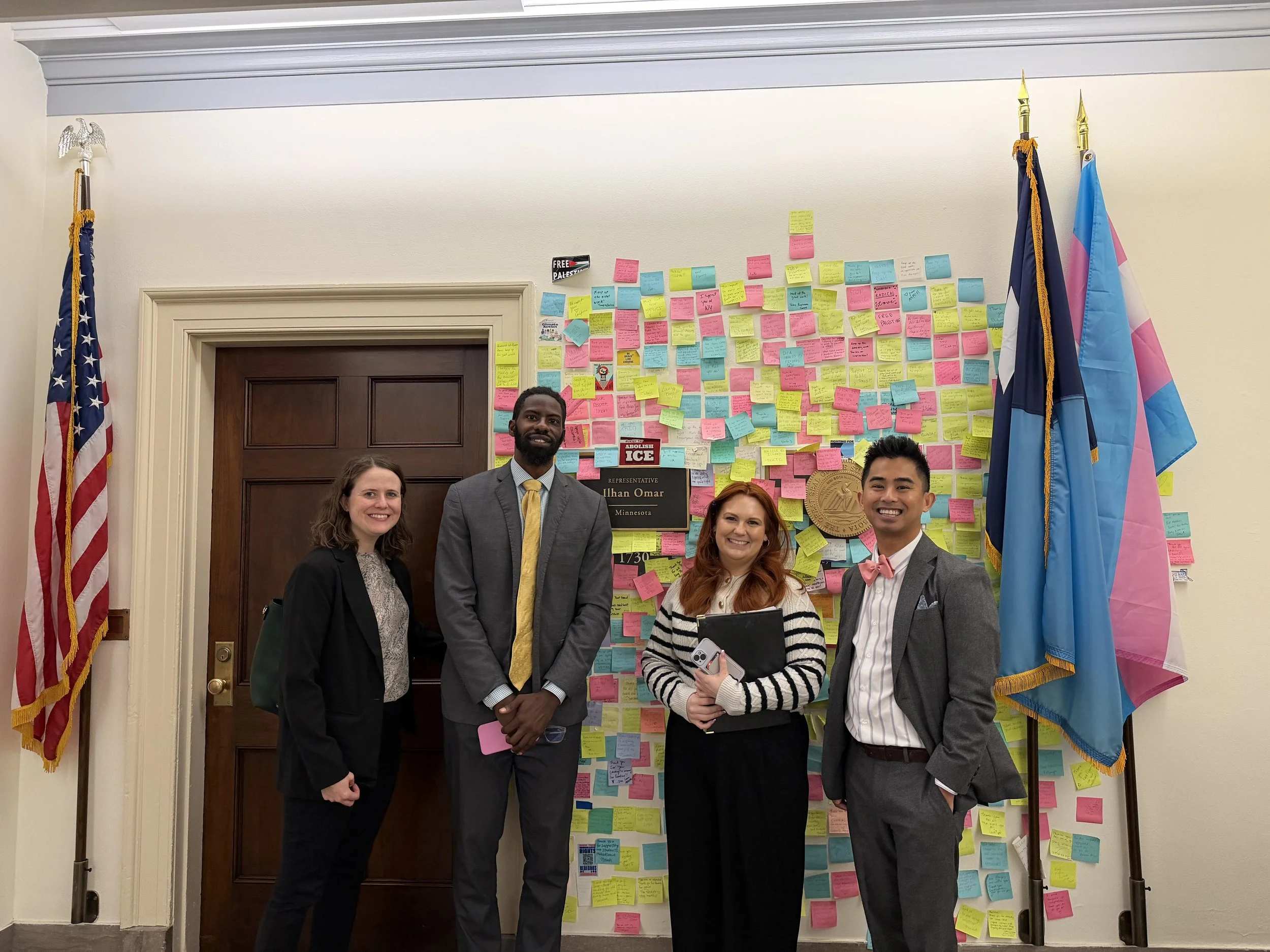
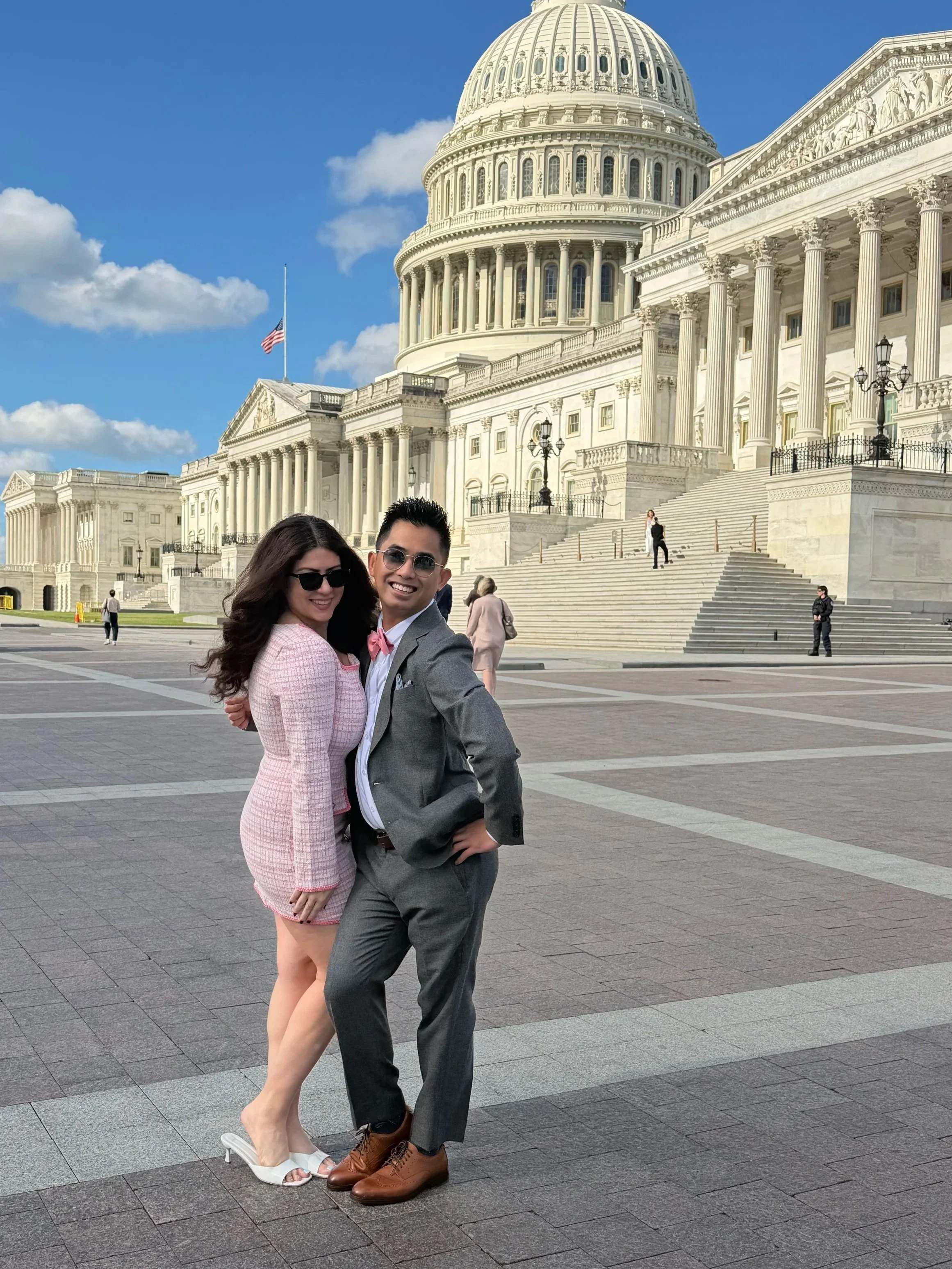
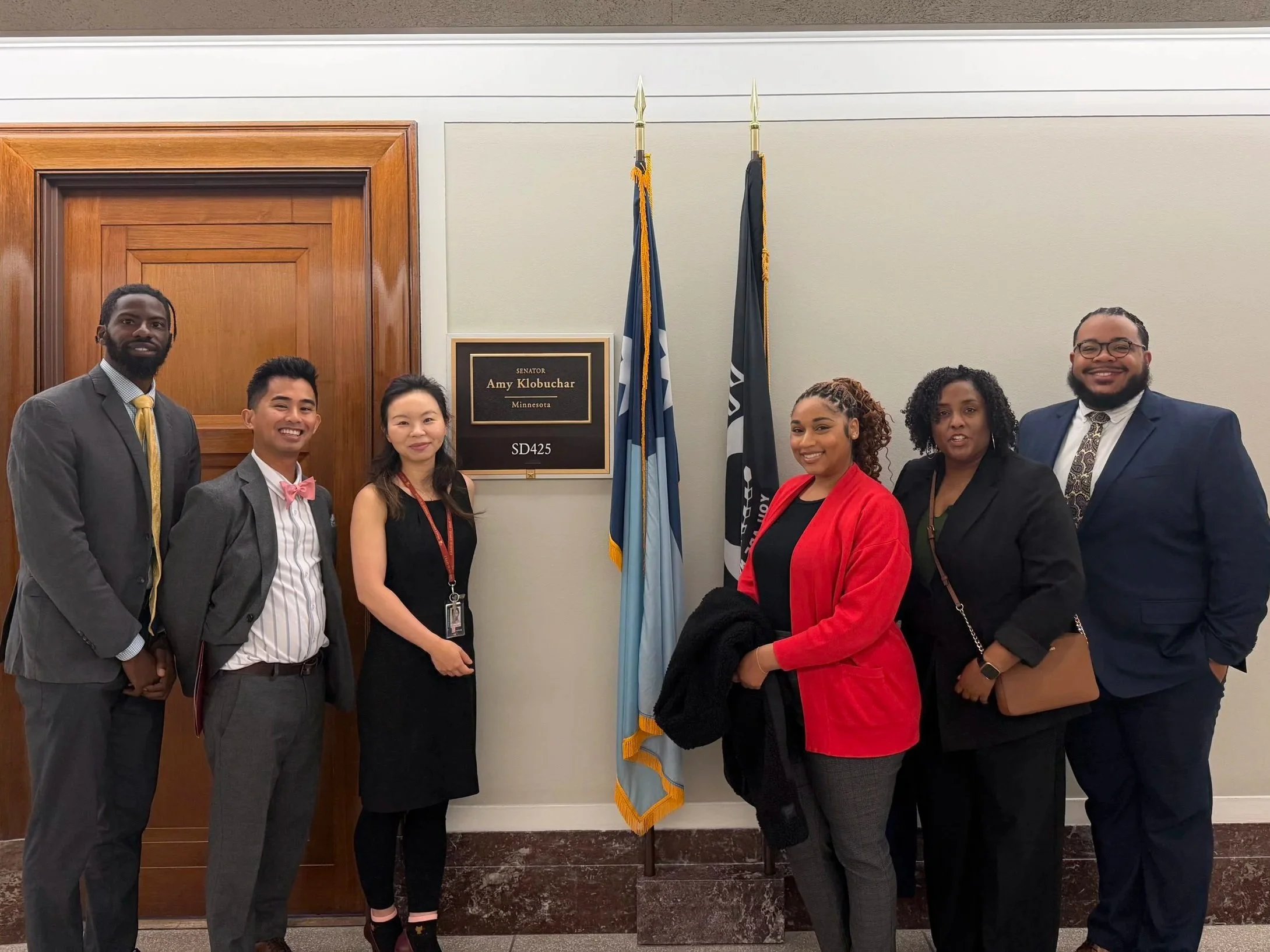
Foundation for the Advancement of Human Systems Advocacy Visit, Washington, D.C.,
May 2026
As a Doctoral Fellow with the Foundation for the Advancement of Human Systems Minority Fellowship Program, I participated in Capitol Hill advocacy visits focused on behavioral health workforce development, mental health access, prevention, early identification, and culturally responsive care.
The images include a visit to the U.S. Capitol with Dr. Eman Tadros, external dissertation committee member, a constituent meeting with a representative from Congresswoman Ilhan Omar’s office alongside foundation staff, and a meeting with a representative from Senator Amy Klobuchar’s office alongside other doctoral students and alumni.
Public Scholarship
At the End of My Scope is a course-based pilot public scholarship podcast developed for CFT 7940: Advanced Research Seminar.
Co-hosted with Brent M. Williams, JD the project brings together a marriage and family therapist and a corporate attorney to think across the edges of clinical care, law, ethics, and everyday life.
The pilot explores topics such as estate planning, death anxiety, money, autonomy, elder vulnerability, and professional scope. It reflects my interest in making complex clinical and ethical questions accessible without flattening their uncertainty.
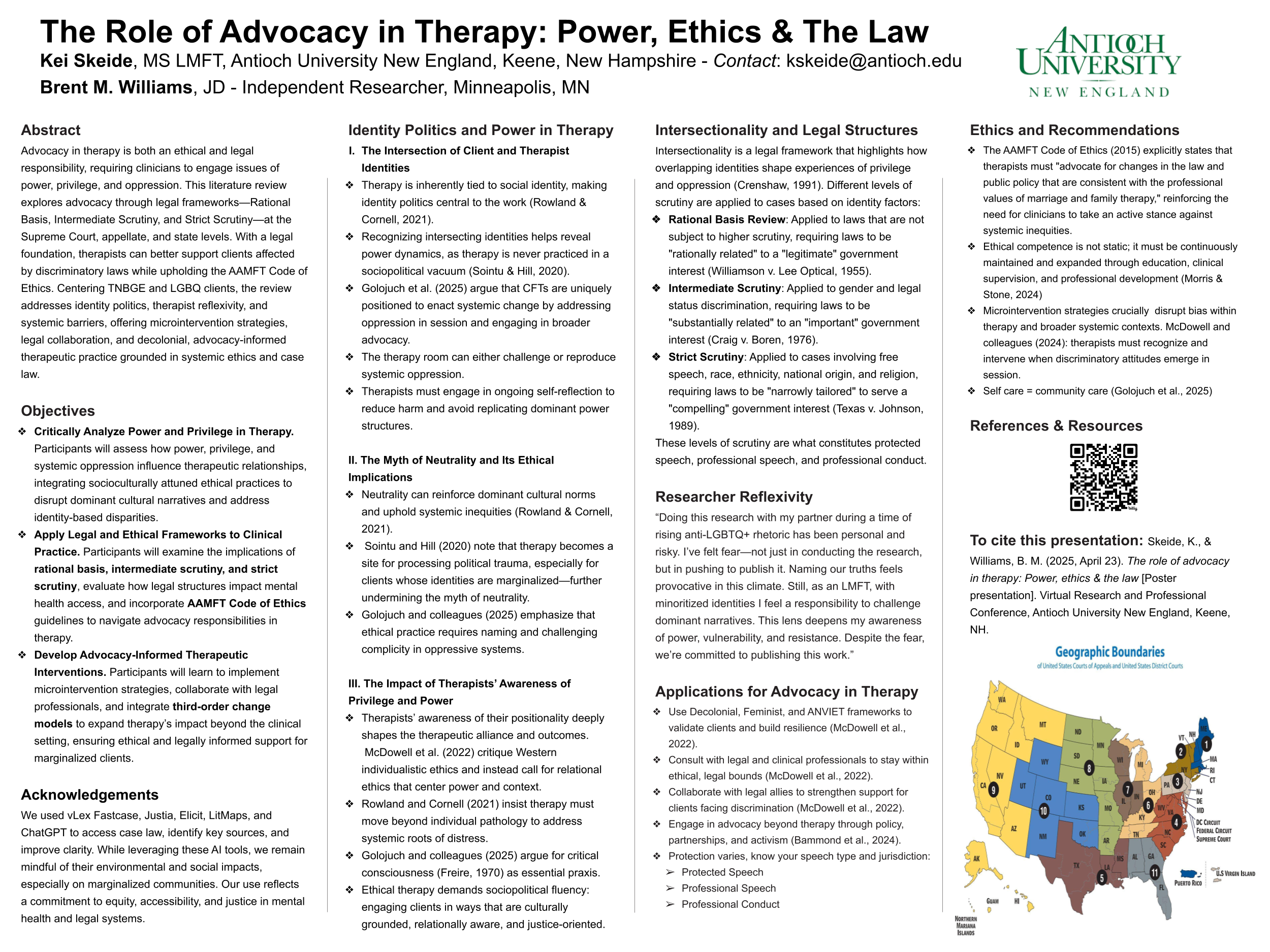
At the 2025 Antioch University New England CFT Virtual Research and Professional Conference, I co-presented “The Role of Advocacy in Therapy: Power, Ethics & The Law” with Brent M. Williams, JD. This presentation became a foundation for several later papers and projects, including a forthcoming article with the Journal of Family Theory, and reflected my broader commitment to scholarship that connects clinical practice, law, ethics, and social justice. I also served on the conference planning committee.
United States v. Skrmetti
Developed for the course CFT 7040: Family Policy and Advocacy, this policy brief demonstrates my ability to translate systemic clinical knowledge into family policy analysis and advocacy. The linked brief applies the Family Impact Lens to United States v. Skrmetti and Tennessee SB1, examining implications for transgender and gender-diverse youth, caregivers, schools, and systems of care.
From Children’s Parable to Feminist Horror: Relational-Cultural Theory and the Cost of Non-Mutuality in The Giving Tree and The Substance
This collaboratively authored theoretical paper was developed for CFT 7300 Clinical Innovations with Diverse Populations, with all three authors contributing equally. It places The Giving Tree and The Substance in conversation to examine how cultural narratives normalize non-mutuality, extraction, and self-erasure. Within my portfolio, it extends my broader social justice and public scholarship on consent, power, and relational accountability by showing how stories teach us whose giving is expected, whose needs matter, and which forms of harm become acceptable.
On becoming a researcher

The following excerpt is my reflection on research as a shared, accountable process rather than something produced only within universities. It emphasizes listening across communities, translating knowledge into useful forms, and allowing the people most affected by research to help shape its questions, meaning, and impact.
“ […] this means returning to dialogue. It means remaining in communication with participants, scholars, clinicians, technologists, community members, students, and people whose experiences do not confirm my assumptions. It also means recognizing that I am one contributor to a much larger body of knowledge. My work does not need to carry every answer. It needs to make its contribution responsibly and remain answerable to the relationships through which that contribution becomes possible. Public scholarship has helped me understand dissemination not as knowledge traveling outward from the academy, but as reciprocal work in which communities also shape the questions, language, interpretation, and use of research.”
A Reflexive
Thematic Analysis of
Advocacy,
Belonging,
and
Educational Access
Qualitative Research
Listening is never neutral. In the linked qualitative interview project, I examined how one person made meaning of a Black teacher’s advocacy and how that relationship shaped belonging, educational access, and later professional identity. Grounded in social constructionism, I used a semi-structured interview and reflexive thematic analysis, moving through two coding cycles and analytic memo writing to identify themes of racial mirroring, institutional gatekeeping, community kinship, and embodied knowledge.
The process also required me to examine where shared experience strengthened my listening and where recognition risked becoming projection. By making those interpretive choices visible and limiting my claims to one co-constructed account, Listening Across Lines demonstrates my developing competence in qualitative data generation, coding, theme development, reflexivity, analytic rigor, and relational ethics. It approaches advocacy not as an abstract value, but as something enacted through relationships that change what becomes possible.
Completed on April 14, 2025, for CFT 7190: Introduction to Qualitative Research Methods.
Artificial Intelligence, Companionship, Loneliness, and the Relational Health of Emerging Adults
Quantitative Research
This recorded presentation shares preliminary findings from Digital Companionship and the Relational Health of Emerging Adults, an IRB-approved observational study of U.S.-based adults ages 18 to 29. The broader study includes four assessment waves across nine months: baseline, three months, six months, and nine months. The presentation focuses on the 194 respondents who completed the baseline SurveyMonkey assessment.
The survey examined patterns of AI use, relational orientation toward AI, technology attachment, loneliness, friendship functioning, stress, social anxiety, depression, and generalized anxiety. Baseline analyses included descriptive statistics, Pearson correlations, and hierarchical regression models. Because the UCLA Loneliness Scale was added after data collection began, analyses involving loneliness were limited to respondents with complete UCLA data.
The clearest preliminary pattern was not that AI use itself was uniformly associated with distress. Instead, how participants related to AI and technology appeared more informative than how often they used it. Greater technology attachment and relational openness toward AI were associated with greater loneliness, social anxiety, and stress and with lower friendship-network functioning. Comfort disclosing to AI was also associated with greater loneliness and lower friendship functioning.
These findings are exploratory, cross-sectional, and noncausal. They cannot determine whether relational engagement with AI contributes to distress, whether distress increases reliance on AI, or whether both reflect other relational and structural conditions. The presentation translates these early findings into practical questions for couple and family therapists, emphasizing curiosity, harm reduction, and attention to what AI use does within a person’s broader relational system.
This work was supported through my participation as a Doctoral Fellow in the Foundation for the Advancement of Human Systems Minority Fellowship Program. Fellowship support contributed to survey administration and participant incentives. FAHS and SAMHSA had no role in the study’s design, data collection, analysis, interpretation, or dissemination.